Rebuilding The DNA TV Experience
DNA wanted to redefine and build their TV experience from the ground up. We at Palmu were tasked with co-creating the new service as a part of the inhouse product team, to define the future DNA TV experience across set-top box, web and mobile platforms. Our work ranged from high-level product and experience direction to defining key user flows, interaction patterns and visual foundations for continued development.
ROLE UI/ UX & VISUAL LEAD, MOBILE DESIGN
YEAR 2019 - 2018
My role focused on the mobile product and UX design across the service, helping shape the overall experience vision, interaction and platform-specific use cases. Working closely with DNA product, development and stakeholders throughout the process.
DNA TV
DNA TV is a versatile entertainment service from one of the major service providers in Finland that combines traditional television with streaming-era flexibility.
The service bringst together live television, recordings, catch-up content, rentals and streaming services into one coherent ecosystem, blurring the boundaries between scheduled broadcasting and on-demand viewing.
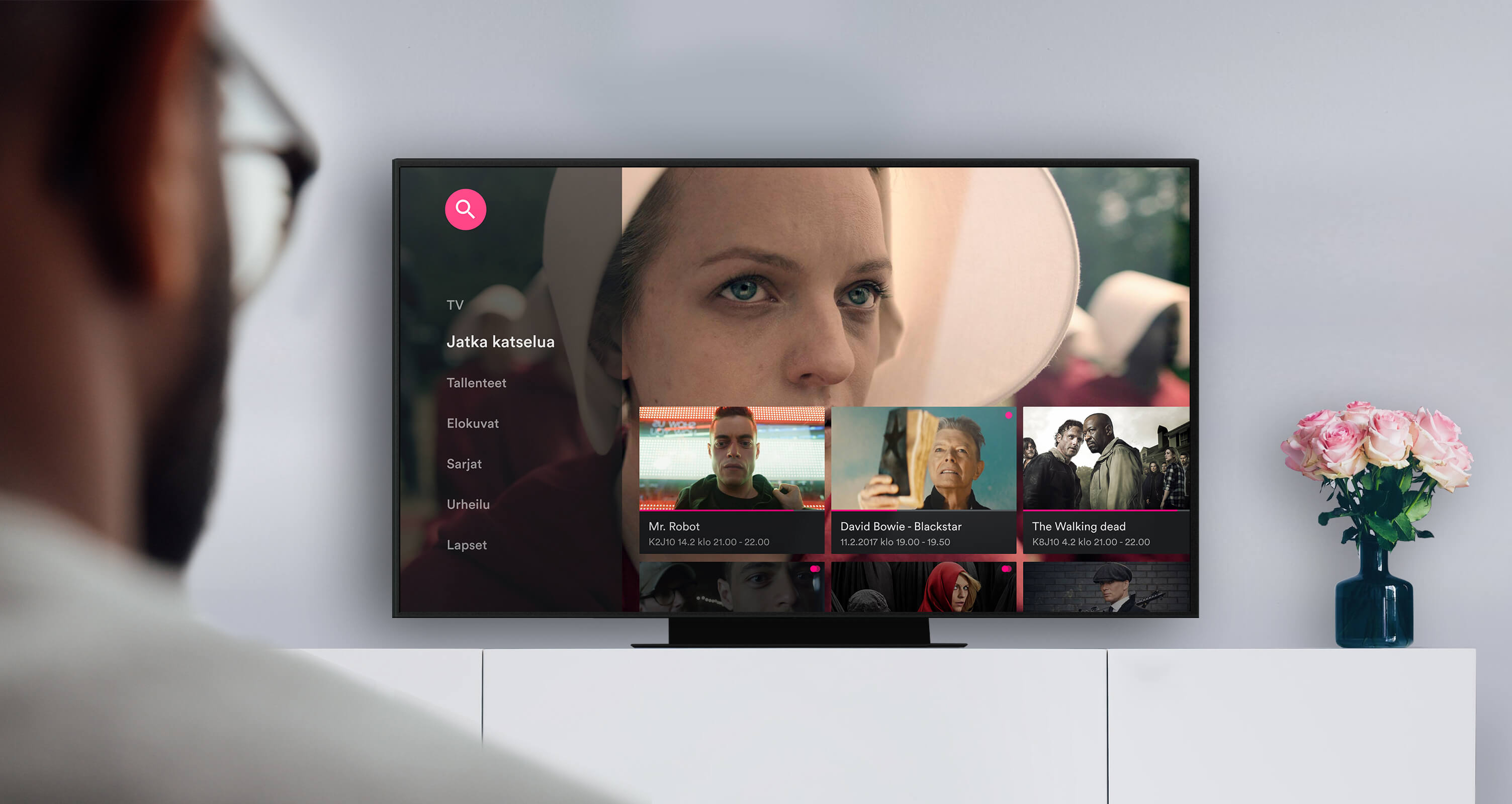
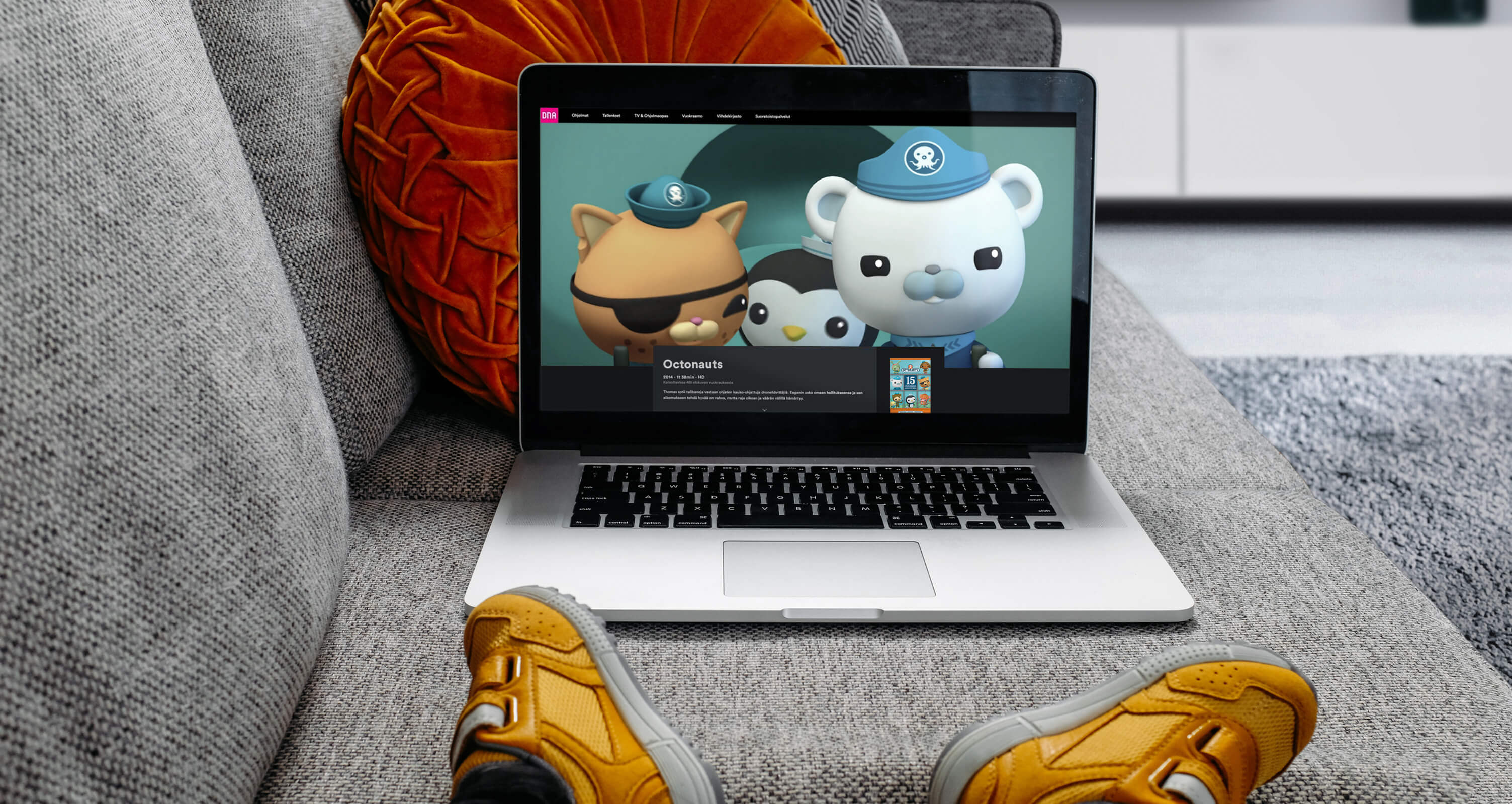
The DNA TV product family consists of a modern Android TV based set-top box experience, Native iOS and Android applications as well as A web service for browsing, viewing and account management.
The ambition was not simply to modernize the interface, but to rethink how users discover, save and continue watching content seamlessly across devices and contexts.
Challenges with the existing experience and goals for the new
DNA wanted to rethink and refocus their TV service concept, as The existing DNA TV backend system was reaching end-of-service life and was fast becoming a hinderance on the speed and quality of development for the service that was required.
The existing DNA TV platform had evolved over a long period of time, resulting in fragmented user flows, inconsistent interaction patterns and increasing technical and design debt.
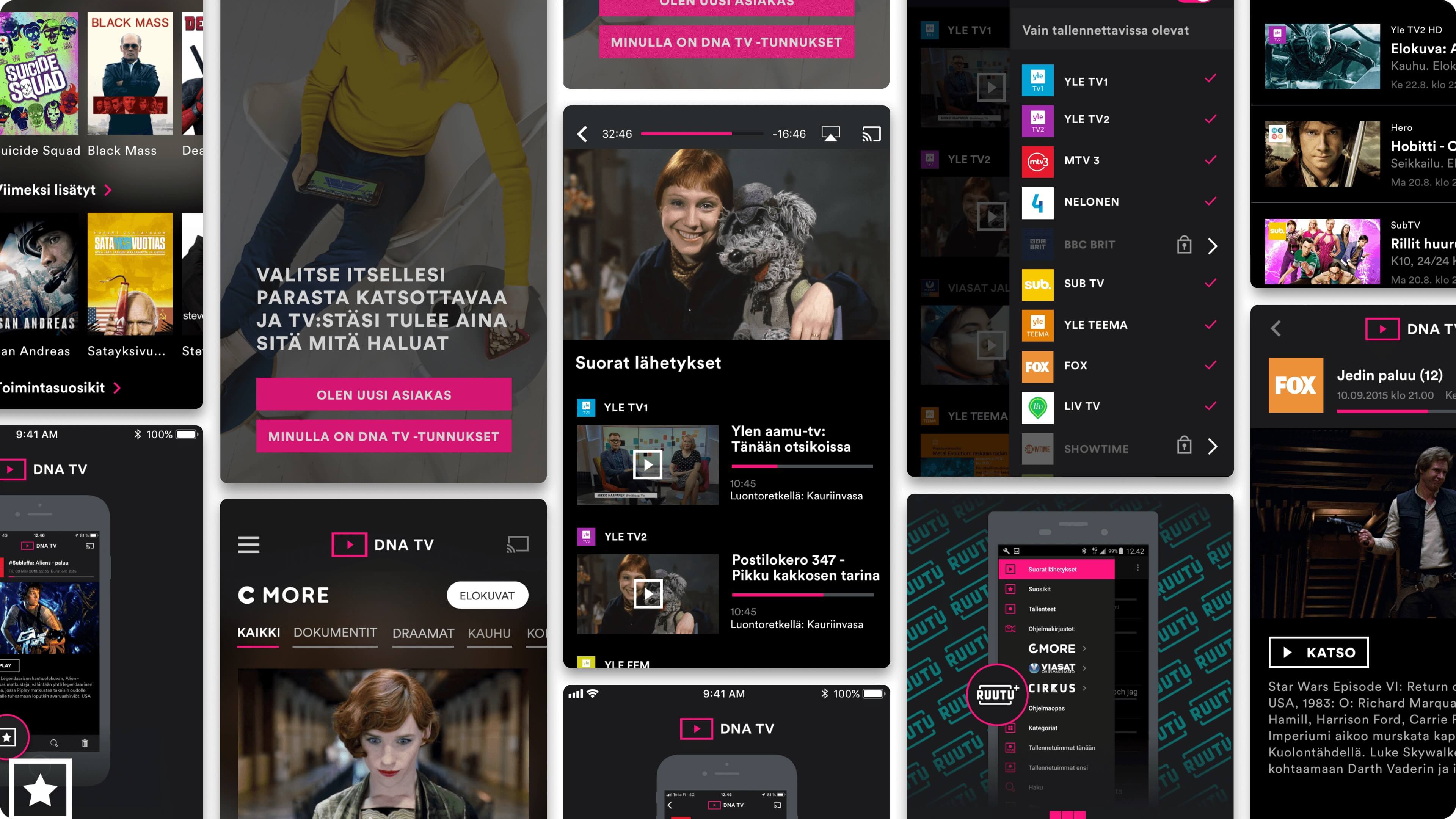
At the same time, viewing habits and customer expectations were rapidly evolving as streaming-first services such as Netflix continued redefining usability, personalization and content discoverability.
The redesign aimed to create a modern television and streaming experience that could stand alongside contemporary entertainment platforms while still supporting the strengths of traditional television viewing.
A major focus was improving discoverability across live broadcasts, recordings and on-demand content while creating clearer and more intentional platform-specific experiences for television, web and mobile products.
The project also focused on establishing a more scalable and future-proof foundation for continued development while introducing a more refined and cohesive visual language across the service ecosystem.
At the same time, the experience was designed to support seamless cross-device viewing and continuation, allowing users to browse, save and continue watching content naturally across different environments and contexts.
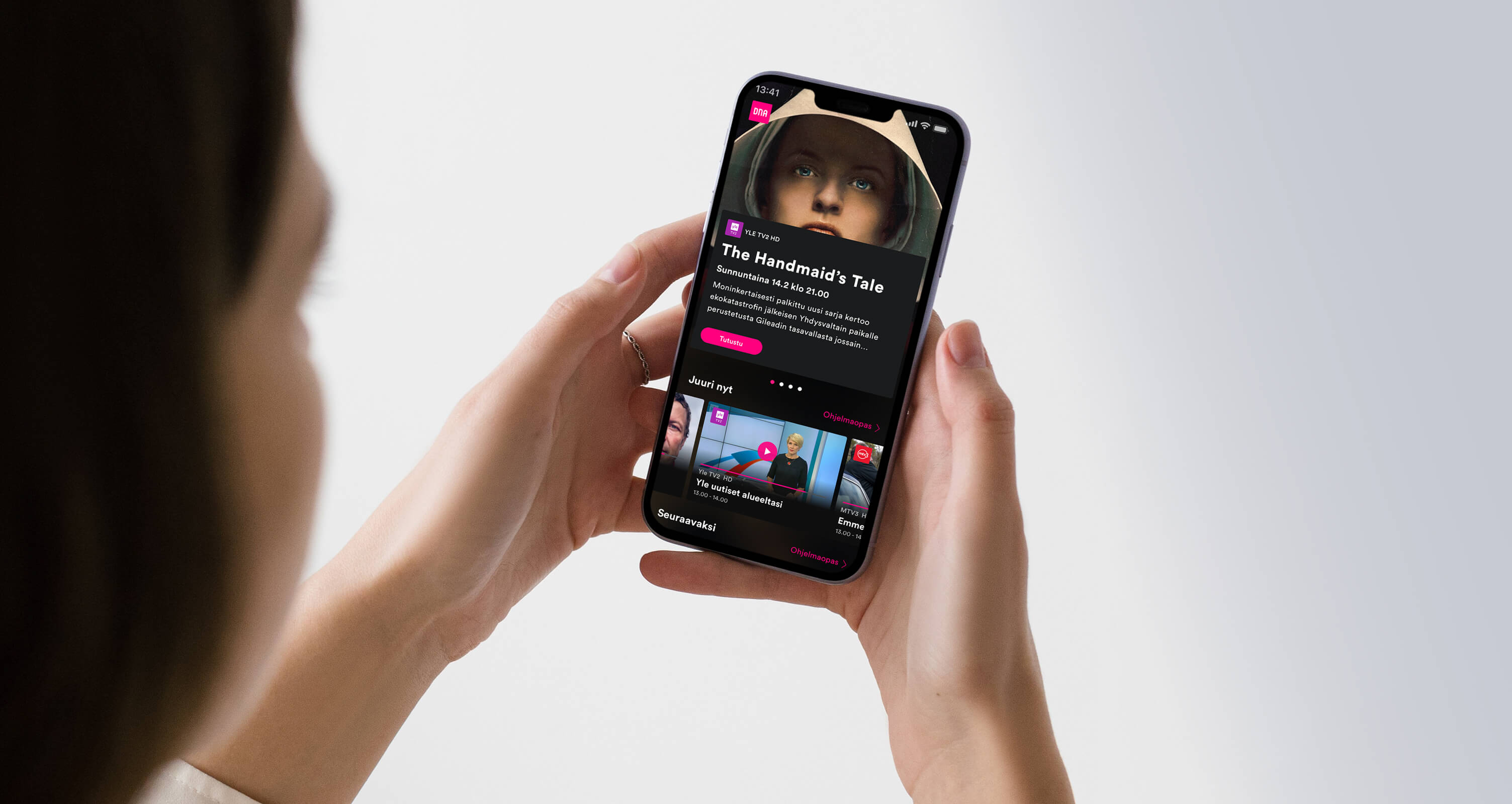
Designing the new DNA TV Experience with a mobile focus and cross-device continuity.
Rather than completely reinventing the DNA TV visual identity, the project evolved and refined the existing look and feel into a more modern and streamlined system. The redesign introduced cleaner layouts, updated typography, more defined color usage and a less box-heavy visual approach that placed greater emphasis on content and usability.
The set-top box experience was built on Android TV with limited customizations options for DNA. Native mobile applications were developed for both iOS and Android, with mobile serving not only as a companion experience but rather also as an important entry point and marketing channel into the service itself.
Always something to watch
One of the core experience goals was reducing the friction between opening the service and finding something relevant to watch. The experience focused heavily on recommendations, collections, personalized categories and rentals that helped surface content more efficiently across the ecosystem.
The intention was to move away from rigid television structures toward a more fluid and modern browsing experience where live content, recordings and streaming media could coexist naturally within the same interface.
Recommendations and personalization
Personalization became a foundational part of the DNA TV experience. Users could tailor the service based on genres, topics, favorite series and viewing preferences, allowing the service to continuously adapt recommendations and content visibility around individual interests.
Rather than treating personalization as a separate feature layer, the goal was to make the overall experience feel continuously relevant and more closely aligned with modern streaming service expectations.
People's viewing habits are also changing. The wide range of streaming services that have emerged alongside linear television have changed the way people consume television series and movies.
People are increasingly watching programmes when it suits them best, For example, the use of mobile device when on the move or travelling.
Browse, discover and save from anywhere
A major focus area was enabling users to browse, discover and manage content regardless of location or device. Mobile applications in particular were designed to support lightweight and continuous engagement with the service by making it easy to discover content, save programs for later viewing and manage recordings remotely.
Unlimited recording functionality and automated recording behaviors modernized traditional DVR workflows into a more flexible cloud-first experience. Users could quickly save content for later viewing, automate entire series recordings and continue watching seamlessly across devices and contexts.
An advanced programme guide and fast recording
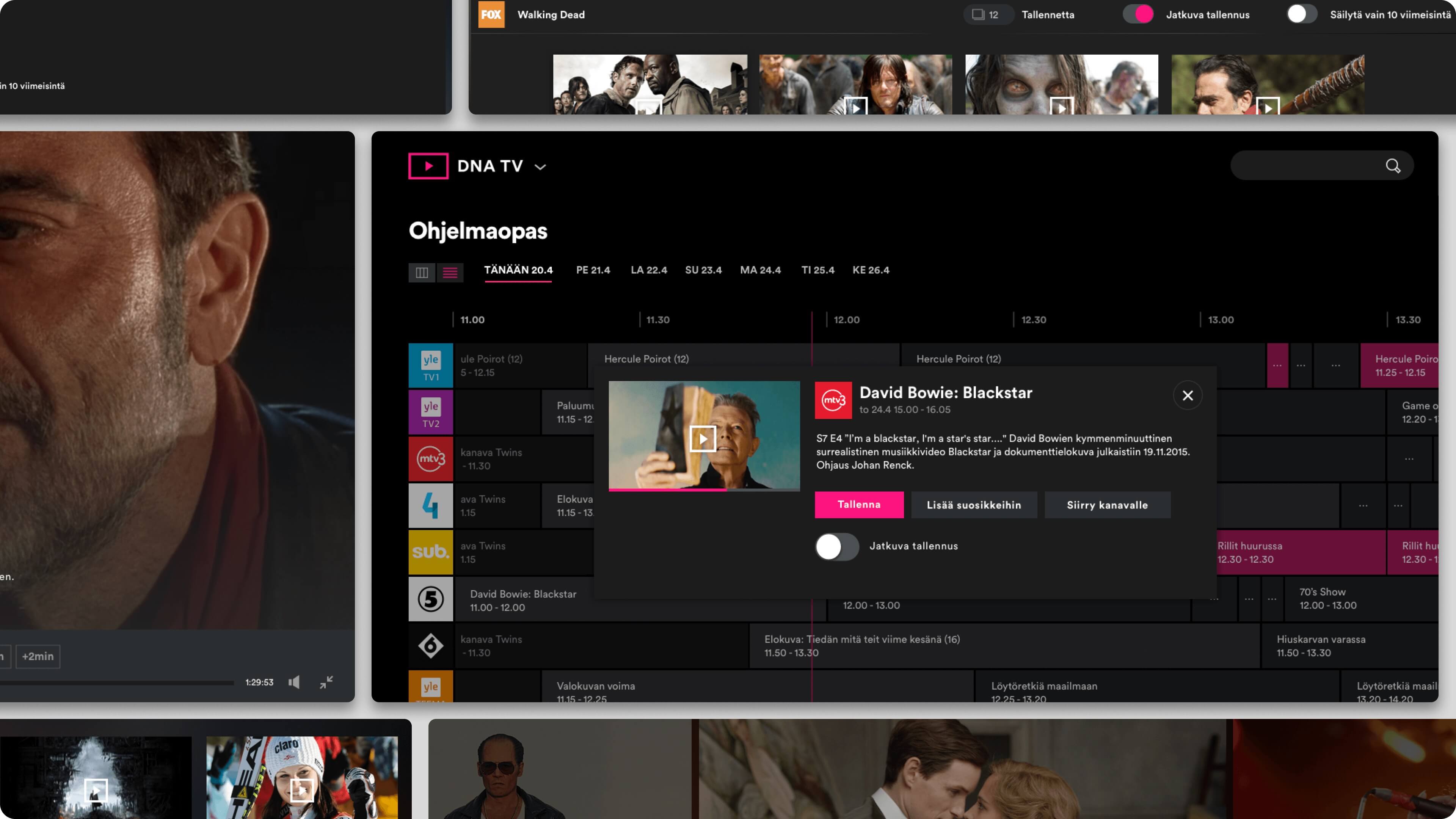
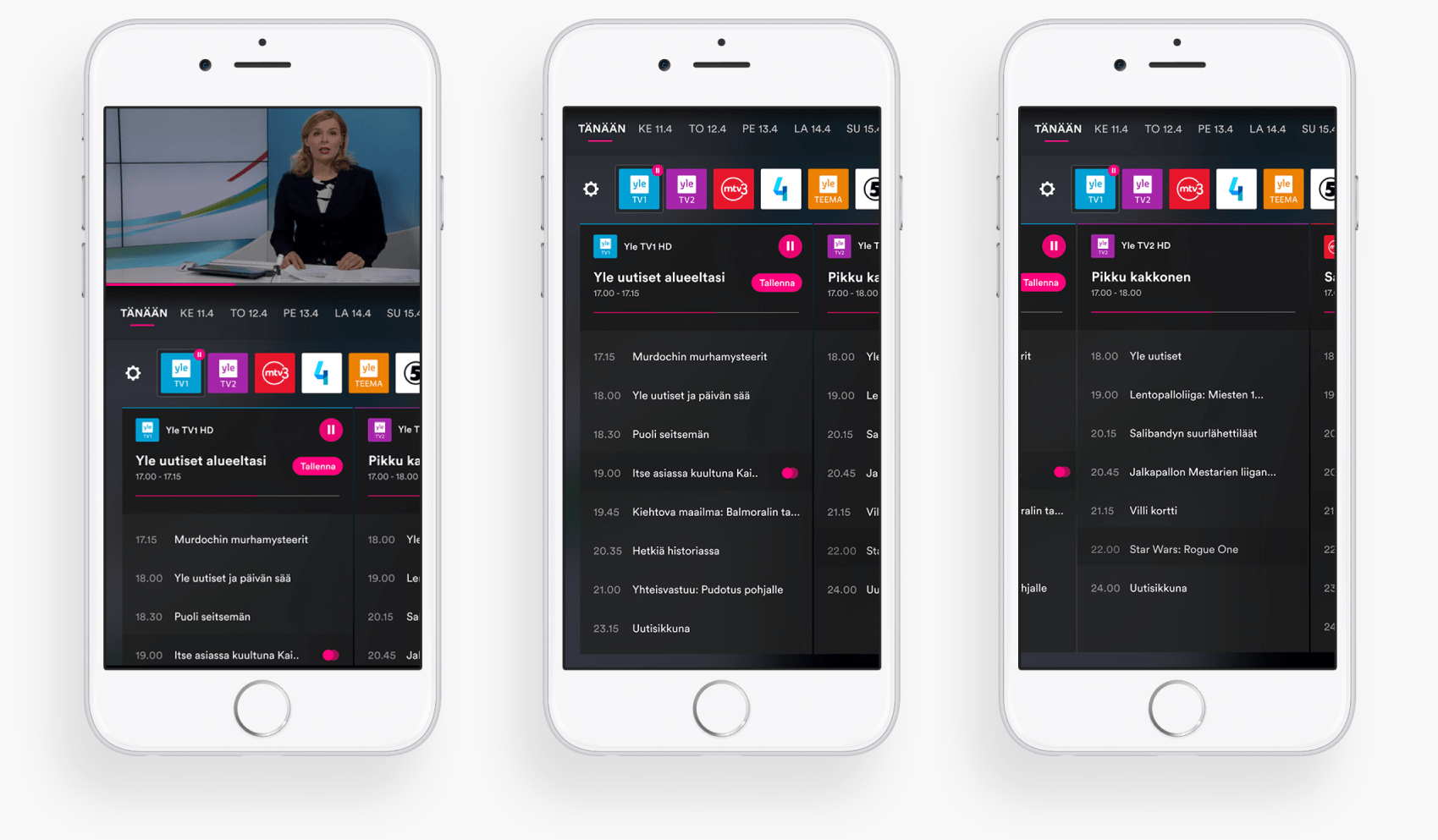
The Electronic Program Guide was redesigned into a more interactive and efficient browsing surface that better supported modern viewing behavior. Instead of acting purely as a static schedule view, the guide became an active part of content discovery and recording management.
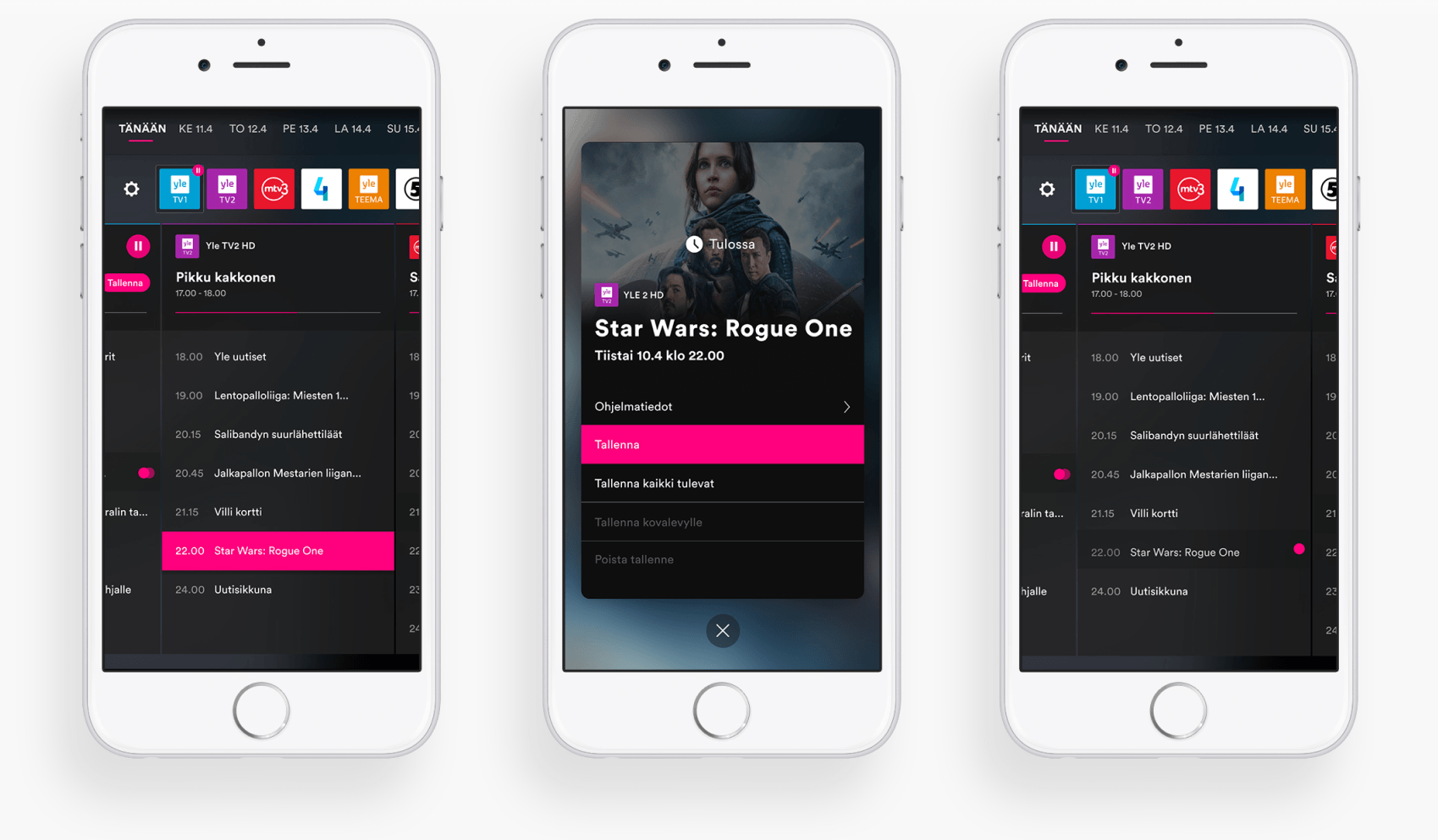
Recording availability and actions were surfaced directly within the guide, allowing users to quickly schedule recordings without interrupting browsing flows or leaving the EPG view entirely. Advanced recording rules also allowed users to automate recurring behaviors, such as recording all episodes of a series or all movies from a selected channel.
Recording rules
Advanced recording rules transformed traditional DVR functionality into a more automated and effortless experience across both the set-top box and mobile applications.
Instead of manually scheduling individual recordings, users could create persistent recording rules that automatically captured future content based on selected series, channels or categories.
This allowed users to effectively “set and forget” their viewing preferences — ensuring they would never miss a new episode of a favourite series or upcoming movies from preferred channels without needing to continuously manage recordings manually.
Migrating existing customers
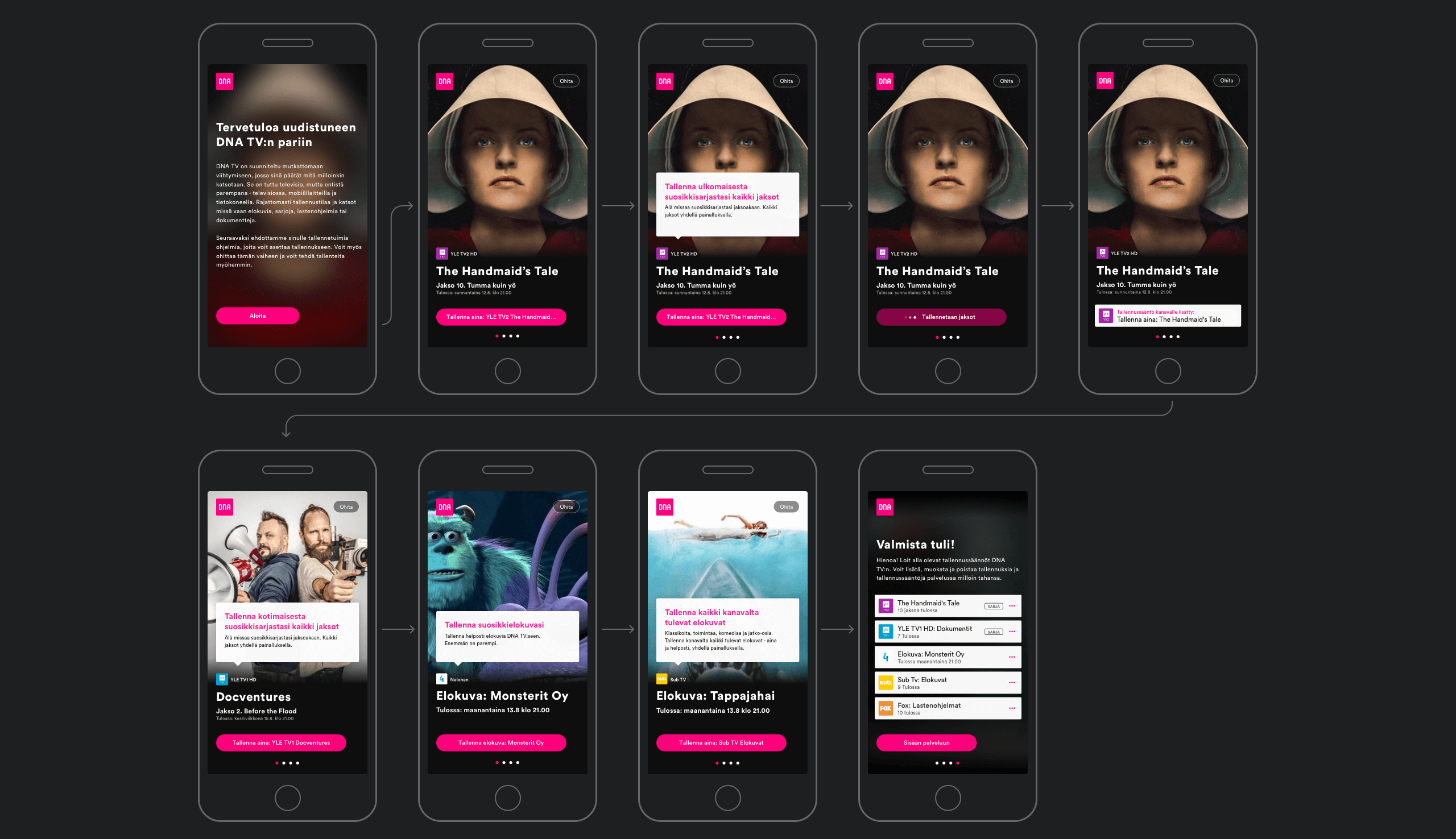
While most of the technical migration happened behind the scenes, certain legacy features - such as existing recording rules - could not be transferred directly into the renewed service.
To help minimize disruption and maintain continuity for users, an additional onboarding flow was introduced
to guide customers through updating their recording preferences for the new platform. The experience focused on making the transition feel as lightweight and understandable as possible while helping users quickly restore the personalized viewing behaviors they had built over time.
Rentals and subscriptions
The renewed service integrated rentals and subscription content more naturally into the broader viewing ecosystem rather than isolating them into separate destinations. Newly released movies and premium content were surfaced alongside other entertainment options, helping create a more unified browsing experience across content types.
Newly released movies and premium content were surfaced alongside other entertainment options, helping create a more unified browsing experience across content types.
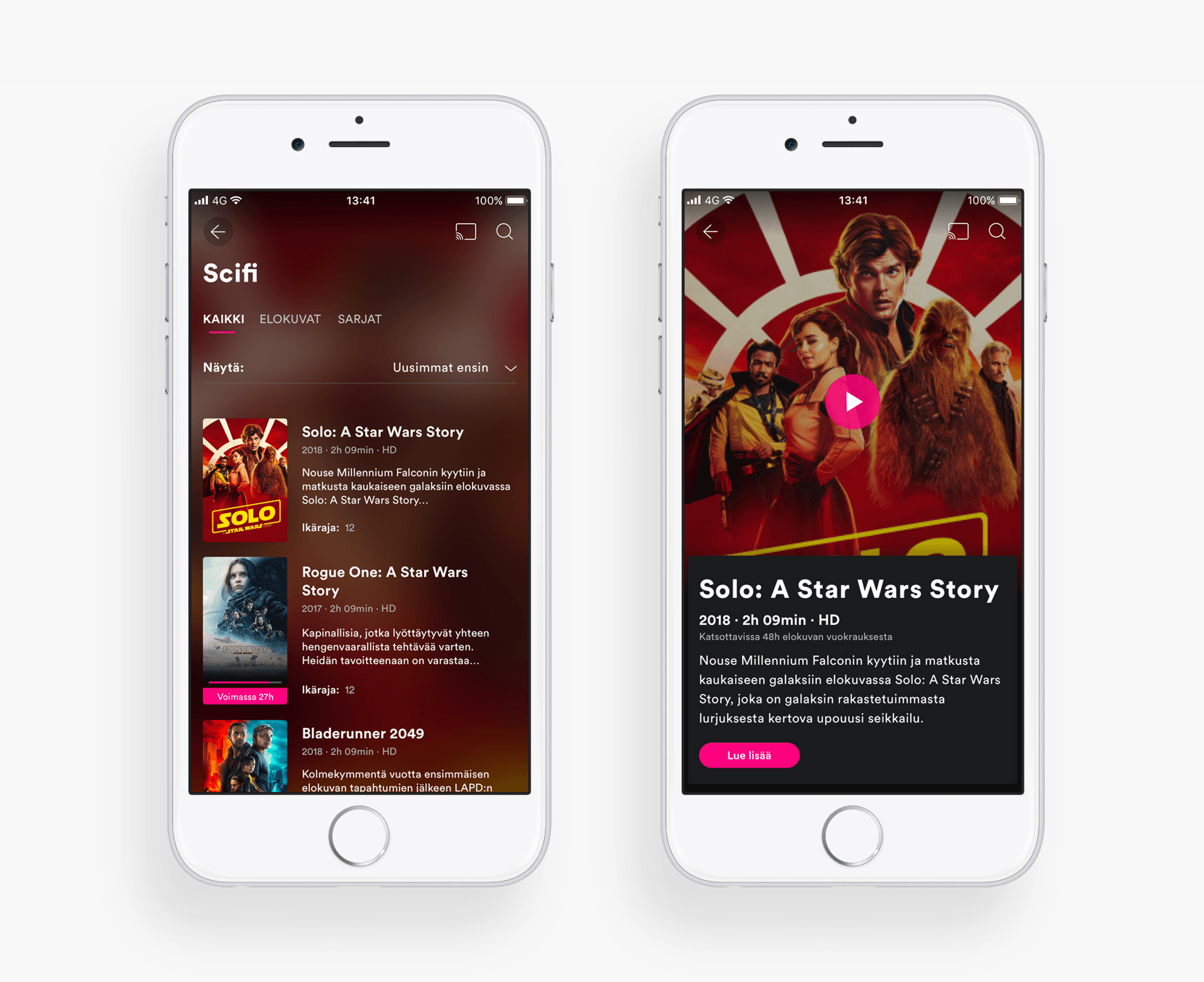
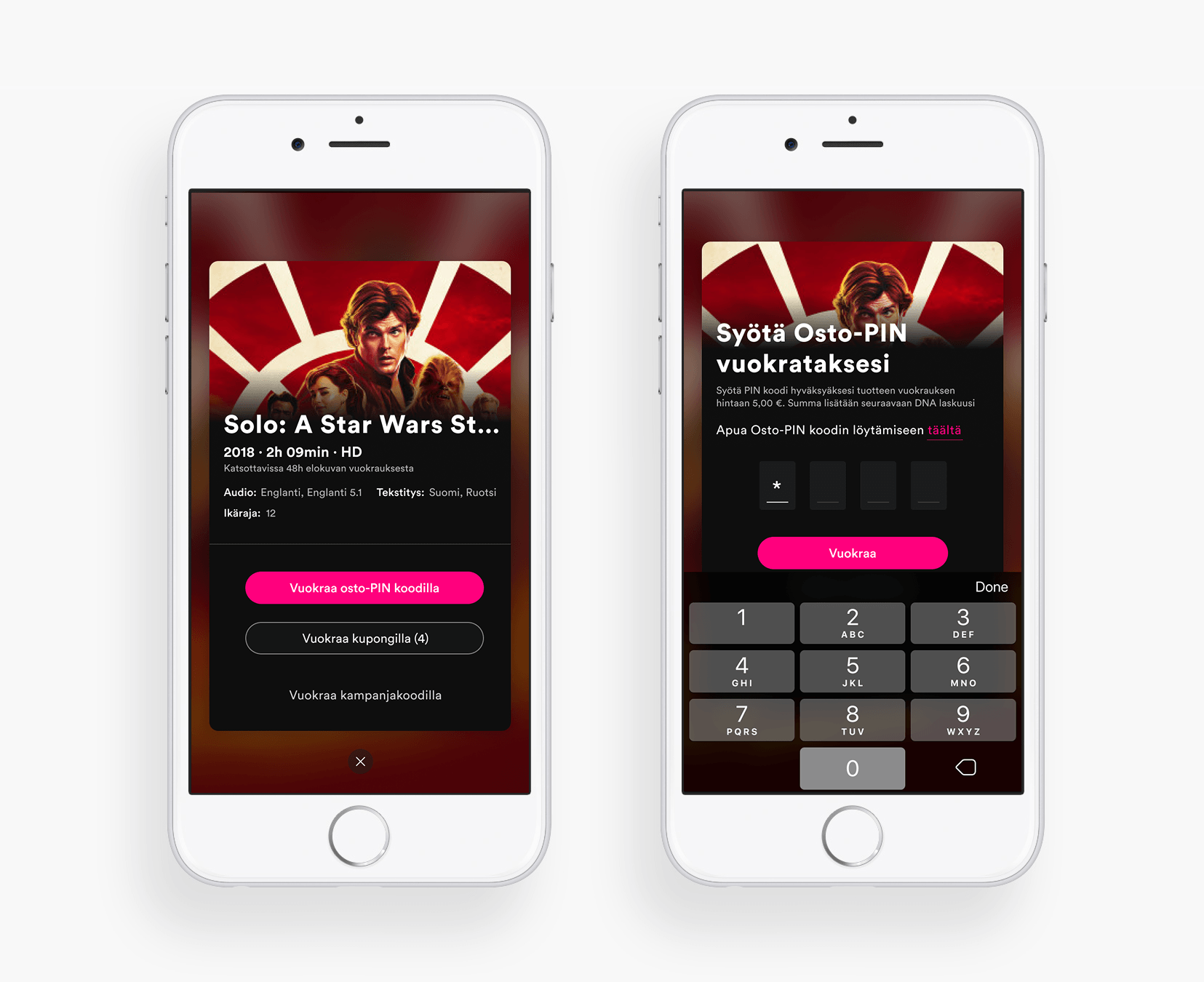
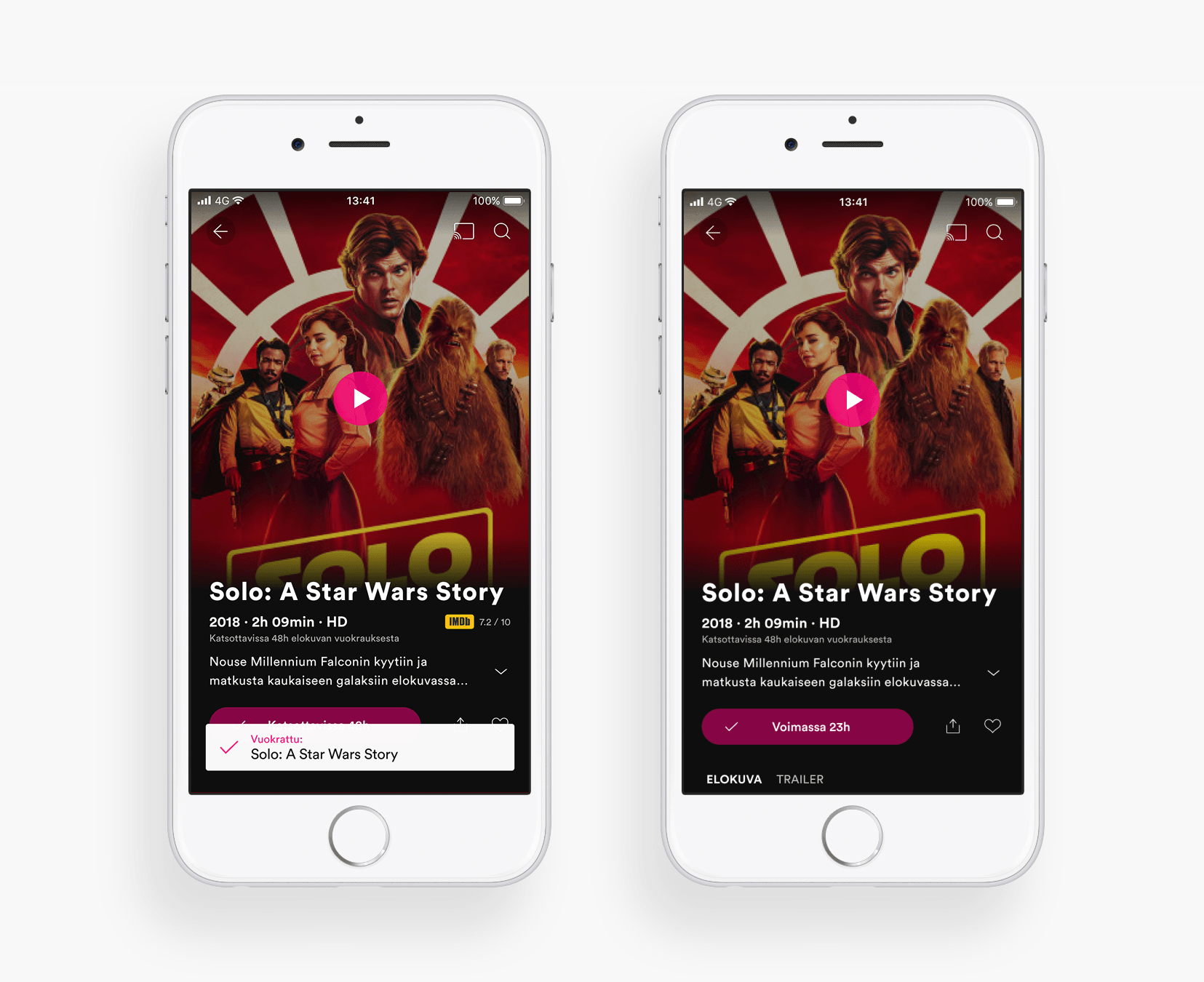
The rental experience was designed to remain lightweight and accessible through existing customer authentication flows, including PIN-based purchasing and direct billing through DNA’s existing customer relationship.
Building a more seamless entertainment experience
The renewed DNA TV experience brought together traditional television and modern streaming behaviors into one coherent cross-platform ecosystem. By improving discoverability, simplifying fragmented experiences and enabling seamless viewing continuity across devices, the service became better aligned with evolving customer expectations and contemporary entertainment habits.
At the same time, the redesign established stronger product and design foundations for future development — helping DNA transition from a legacy television service toward a more modern and scalable entertainment platform.
Copyright © 2011 - 2026 loclouds. Built in Helsinki with pride. Get in touch